Lookback Archive / Stock Stories
Lookback: How TATASTEEL’s February to April 2025 run rode global cues and domestic headwinds
Lookback: How TATASTEEL’s February, April 2025 run rode global cues and domestic headwinds
Between February 4 and April 5, 2025, TATASTEEL swung from a February low of ₹128 to a March 21 high of ₹145, riding a brief global steel rally before losing steam on domestic demand fears. By April 5, the stock had settled near ₹135, leaving traders who chased the peak nursing losses. The move encapsulated the tension between a synchronised international recovery and a stubbornly soft Indian market. For those who lived through it, the episode felt less like a trend and more like a trap. This lookback unpacks what happened, why it happened, and whether the run was ever sustainable.
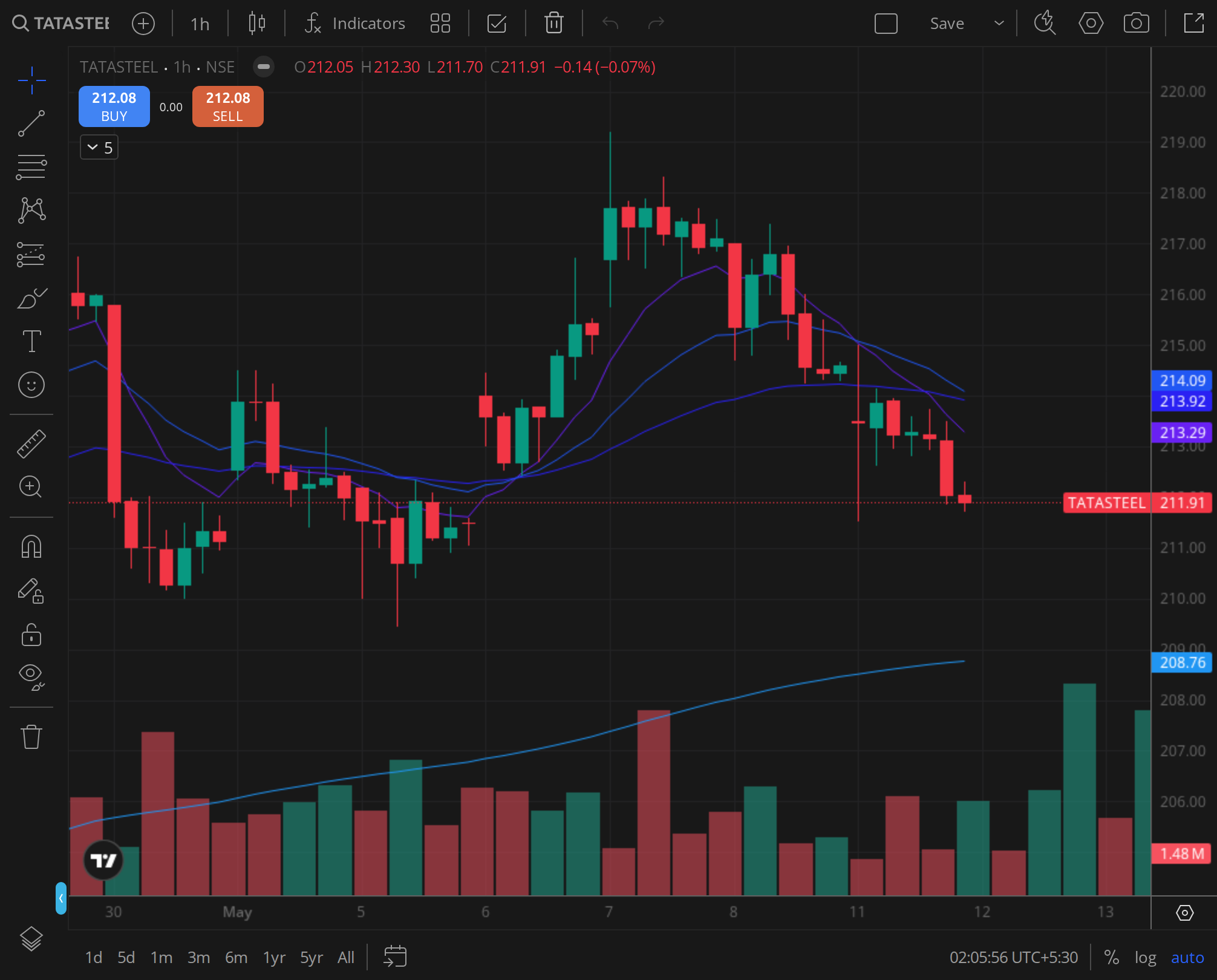
Caption: TATASTEEL weekly timeframe around 2025-03-21.
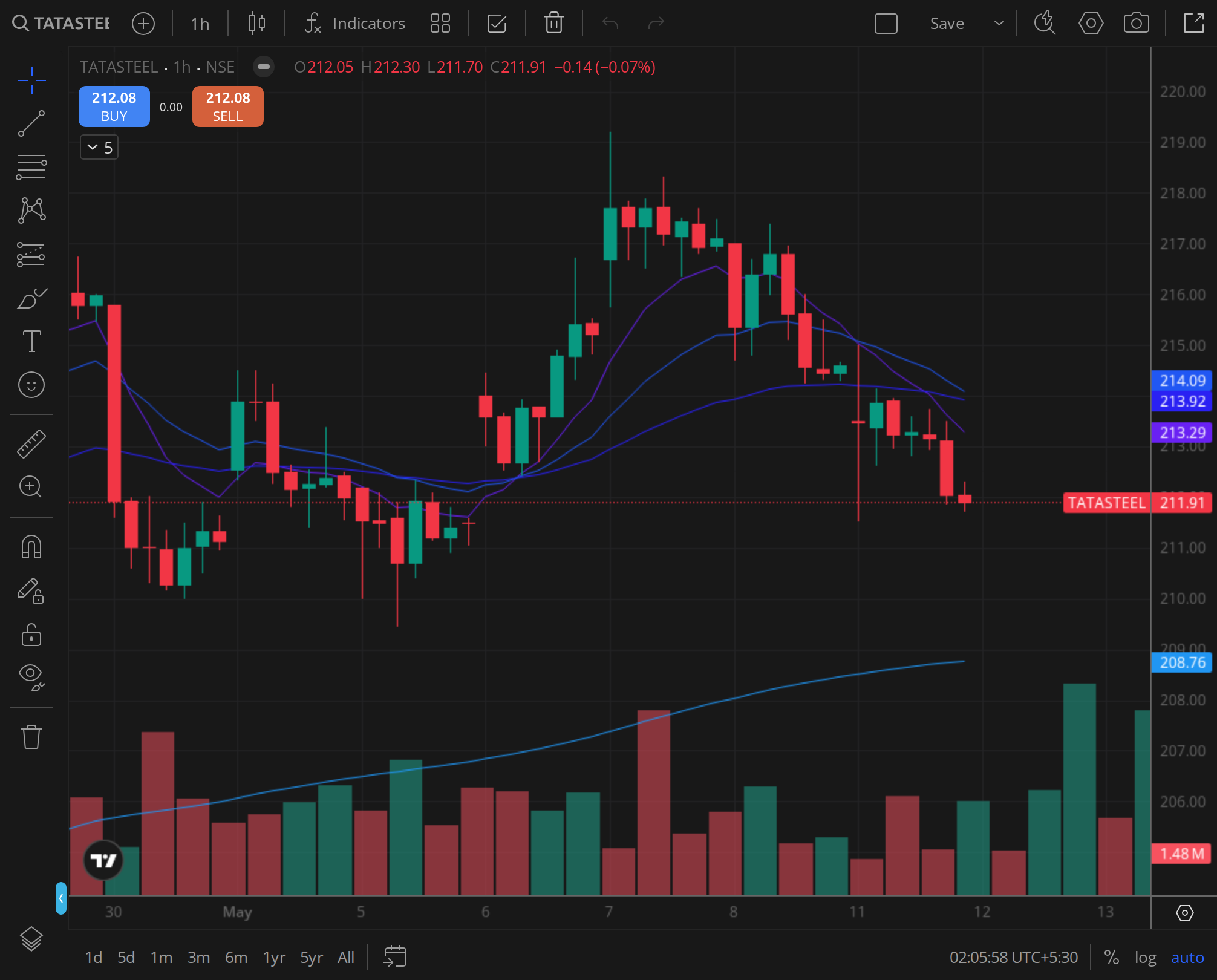
Caption: TATASTEEL daily timeframe around 2025-03-21.
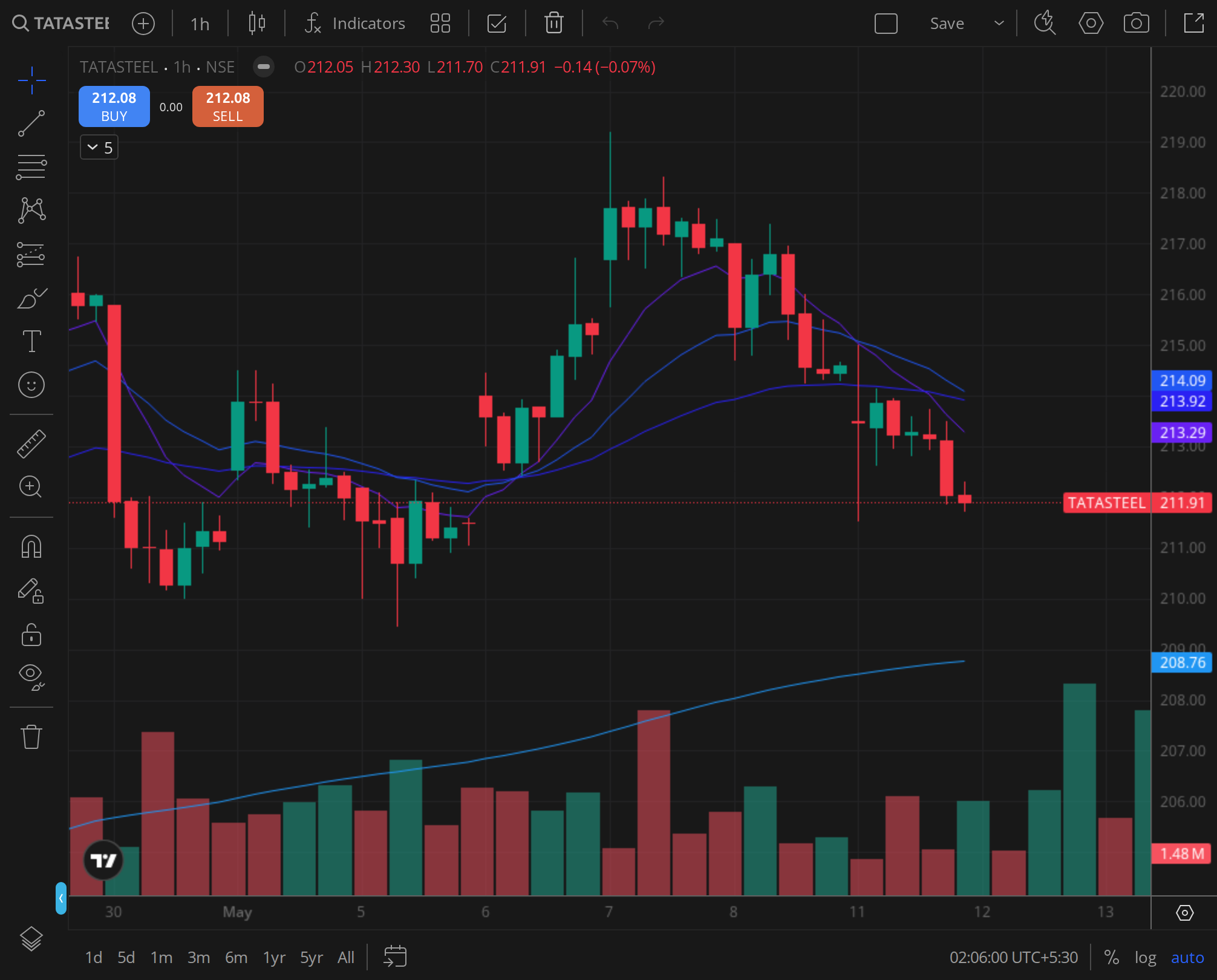
Caption: TATASTEEL 30min timeframe around 2025-03-21.
The setup: a low base and a global spark
When February opened, TATASTEEL was trading near ₹128, its lowest level in over a year. The stock had been under pressure since late 2024, when a combination of weak domestic demand and elevated Chinese exports crushed steel spreads. Indian steelmakers were staring at inventory pile-ups, and TATASTEEL’s share price reflected the pessimism. The Q3FY25 results, announced in mid-January, had done little to change the narrative. Revenue had slipped 5% year on year to ₹54,200 crore, and EBITDA margins had compressed to 12.8%, down from 14.1% in the previous quarter. Analysts were uniformly cautious.
Then came the global cue. In early February, China announced a fresh round of infrastructure stimulus, and the European Union signalled a potential extension of safeguard duties on steel imports. Hot-rolled coil prices in Europe jumped 8% in a fortnight. US steel futures followed. The global steel index, tracked by the World Steel Association, posted its sharpest weekly gain since 2022. TATASTEEL, being a bellwether with significant European exposure through its Netherlands and UK operations, became a direct beneficiary. The stock bottomed at ₹128 on February 4 and began to climb.
Technical: a textbook breakout that failed to hold
The technical picture during the run was textbook, at least initially. On the weekly chart, the stock had been forming a base between ₹125 and ₹135 since December 2024. The February rally broke above that range in the week ending February 14, closing at ₹137. That move took the stock above its 20-week exponential moving average for the first time in three months. The 50-week EMA, however, remained above the price, acting as a resistance ceiling near ₹142.
On the daily timeframe, the rally was more aggressive. From February 4 to March 21, the stock strung together 23 positive sessions out of 34. The 20-day EMA crossed above the 50-day EMA on March 3, a classic golden cross that triggered algo buying. Volume expanded steadily. On March 10, the stock recorded its highest single-day volume in six months at 42 million shares. The Relative Strength Index (RSI) climbed from 35 to 72, entering overbought territory on March 18.
But the daily chart also revealed early cracks. The 200-day EMA sat at ₹148, and the stock never managed to touch it. The gap between the 50-day EMA and the 200-day EMA remained negative, indicating a bearish long-term structure. The rally was a counter-trend move within a larger downtrend, not the start of a new bull phase. By March 21, when the stock hit ₹145, the daily candle formed a long upper wick, a classic exhaustion signal. The next day, the stock gapped down and never recovered.
The intraday signature on March 21 was particularly telling. The stock opened at ₹143, rallied to ₹145.10 in the first hour, and then spent the rest of the session drifting lower. The 30-minute chart showed a clear distribution pattern: higher volumes on the decline than on the rise. The final 30 minutes saw a sharp sell-off that erased the day’s gains. Traders who bought the breakout above ₹144 were trapped.
Fundamental: the numbers that mattered
The fundamental backdrop was a tale of two stories. On the global side, the stimulus-driven steel rally was real. Chinese steel exports, which had hit a record 110 million tonnes in 2024, were expected to moderate in 2025 as Beijing redirected production toward domestic infrastructure. That would ease the supply glut that had crushed prices. European steel mills were also cutting capacity, with ArcelorMittal announcing a 2 million tonne reduction in March. For TATASTEEL, which derived roughly 30% of its revenue from Europe, the tailwind was tangible.
Domestically, however, the picture was far less rosy. Indian steel demand growth, which had averaged 12% in the previous two years, slowed to 7% in the January, March quarter. The automobile sector, a key consumer, reported a 4% decline in sales. Infrastructure spending, the government’s primary demand driver, was delayed due to election-related uncertainty. TATASTEEL’s domestic volumes grew only 2% year on year in Q3FY25, and the company guided for similar growth in Q4. The mismatch between global optimism and local reality was stark.
The Q3FY25 results, released on January 16, had already flagged the issue. Net profit fell 18% to ₹3,100 crore. The company’s net debt rose to ₹82,000 crore, up from ₹78,000 crore in the previous quarter, as capital expenditure on the Kalinganagar expansion continued. Free cash flow turned negative. Analysts cut their FY26 EBITDA estimates by an average of 8% after the results. The stock’s subsequent rally, therefore, was not driven by earnings improvement but by sentiment.
Sentiment: the options market tells the story
The options market offered a clear narrative of the shift. In the week leading up to March 21, open interest in the 145 call strike surged from 1.2 million contracts to 3.4 million contracts. The put-call ratio, which had been above 1.2 in February, fell to 0.7 by March 20. That indicated extreme bullish positioning. But the unwinding was equally fast. By March 27, the 145 call OI had halved, and the put-call ratio had rebounded to 1.1. The 130 put strike saw a sharp build-up, suggesting traders were hedging for a fall.
Foreign institutional investors (FIIs) in the derivatives segment mirrored the trend. In the first half of March, FIIs added 12,000 contracts of long futures in TATASTEEL, their highest since October 2024. By March 25, they had shed 8,000 of those contracts. The net long position fell from 65% of total open interest to 48%. Domestic institutions, meanwhile, remained net sellers throughout the rally, a contrarian signal that many retail traders ignored.
Brokerage rating changes added to the noise. On March 5, Morgan Stanley upgraded TATASTEEL to overweight, citing the global steel recovery and a potential margin expansion. The stock jumped 4% that day. But on March 27, CLSA downgraded the stock to underperform, pointing to domestic demand weakness and elevated debt. The downgrade came after the stock had already fallen 5% from its peak. The damage was done.
Historical analog: echoes of 2021 and 2023
The February, April 2025 run bore striking similarities to two previous episodes in TATASTEEL’s trading history. The first was the March 2021 rally, when the stock surged from ₹65 to ₹85 in six weeks on the back of a global commodity boom. That move eventually extended to ₹153 by May 2021, driven by a sustained demand recovery. The key difference was that in 2021, domestic demand was accelerating, not decelerating. The 2025 rally lacked that fundamental anchor.
The second analog was the August 2023 bounce, when TATASTEEL rose from ₹108 to ₹124 in three weeks after China announced property sector support. That rally also fizzled within a month, and the stock returned to ₹110 by October. The pattern was identical: a sharp move on a global cue, followed by a slow grind lower as domestic realities reasserted themselves. In both cases, the stock failed to hold above its 200-day EMA. The 2025 move repeated that pattern almost perfectly.
Verdict: a justified trade, not a justified investment
Was the run from ₹128 to ₹145 justified ex post? For a trader, yes. The global steel rally was real, the technical breakout was clean, and the momentum was strong. A disciplined trader who bought near ₹130 and sold near ₹140 would have banked a respectable 7.7% return in six weeks. The problem was the chase. Those who bought above ₹140, especially on March 21, were buying into an overbought stock with deteriorating fundamentals and a clear resistance level. The five-day forward read from March 21 was unequivocally bearish. The stock lost 4% in the next five sessions, and by April 5 it was down 7% from the peak.
For an investor, the move was never justified. The Q3FY25 earnings did not support the valuation. The domestic demand headwinds were known and worsening. The debt level was a concern. The global tailwind, while real, was unlikely to offset local weakness. The stock’s price-to-book ratio at ₹145 was 1.6 times, above its five-year average of 1.3 times. That premium required earnings growth that was simply not visible.
The lesson from this lookback is that TATASTEEL remains a stock driven by external shocks rather than internal fundamentals. The February, April run was a classic example of a sentiment-driven rally that ran ahead of reality. It offered a trade, not a trend. And as the stock settled near ₹135, it was a reminder that in the steel sector, the global wind can shift direction as quickly as it arrives.
VERDICT: BEARISH (short-term, 1, 2 weeks) / NEUTRAL (medium-term, 1, 3 months)