Lookback Archive / F&O Studies
Lookback: How the March 26 VIX spike caught F&O desks off guard
Lookback: How the March 26 VIX spike caught F&O desks off guard
By Aditya Sharma, Founding Editor at BazaarBaazi
On March 26, the India VIX surged over 18% in a single session, breaching the 16 mark for the first time in three months. The spike triggered margin calls across an estimated 15% of Nifty 50 futures and options positions, squeezing short-volatility traders who had piled into strangle sales during the preceding calm. For desks that had grown accustomed to a placid expiry cycle, the sudden jolt was a brutal reminder that volatility, when it returns, does not knock.
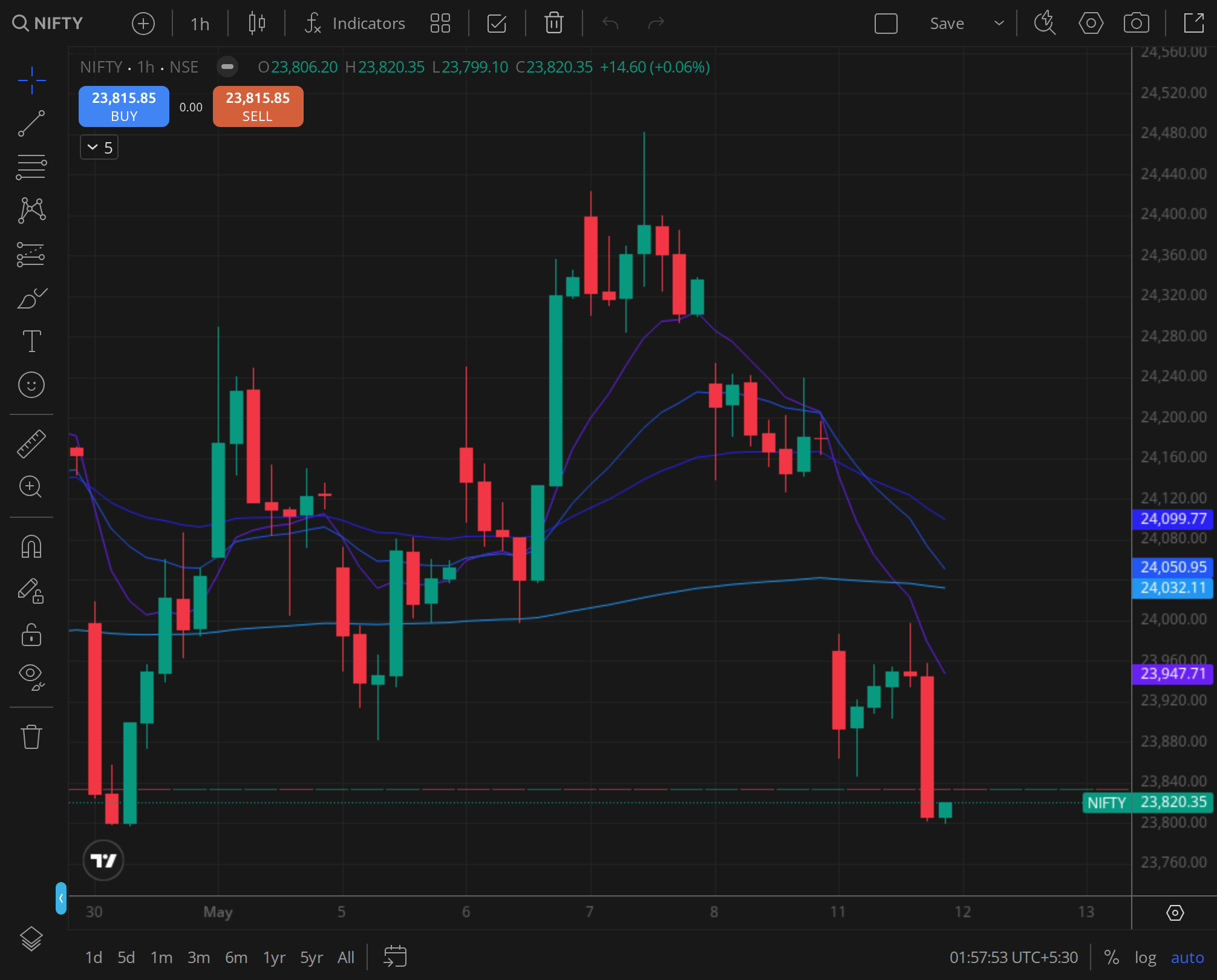
Caption: NIFTY weekly timeframe around 2026-03-26.
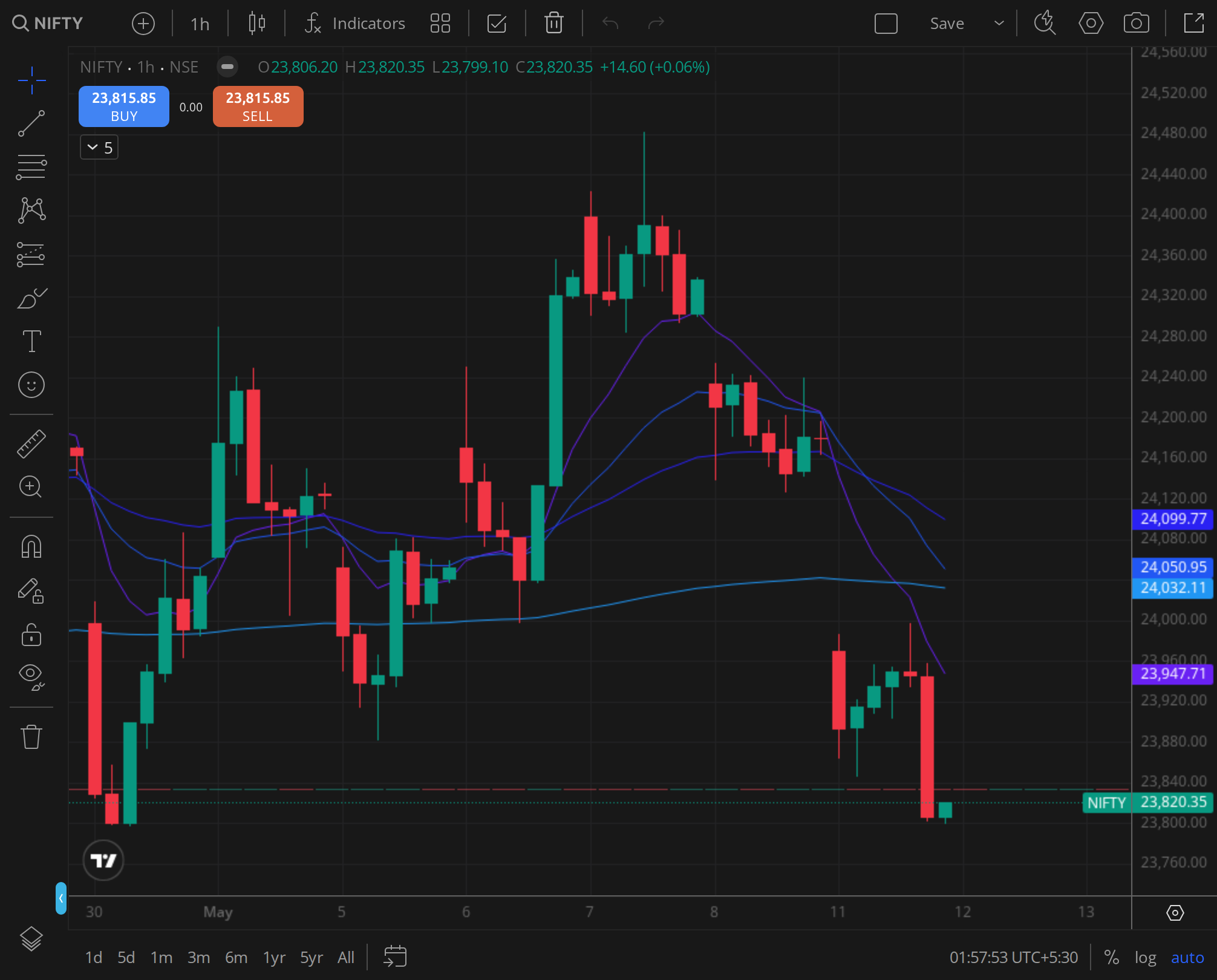
Caption: NIFTY daily timeframe around 2026-03-26.
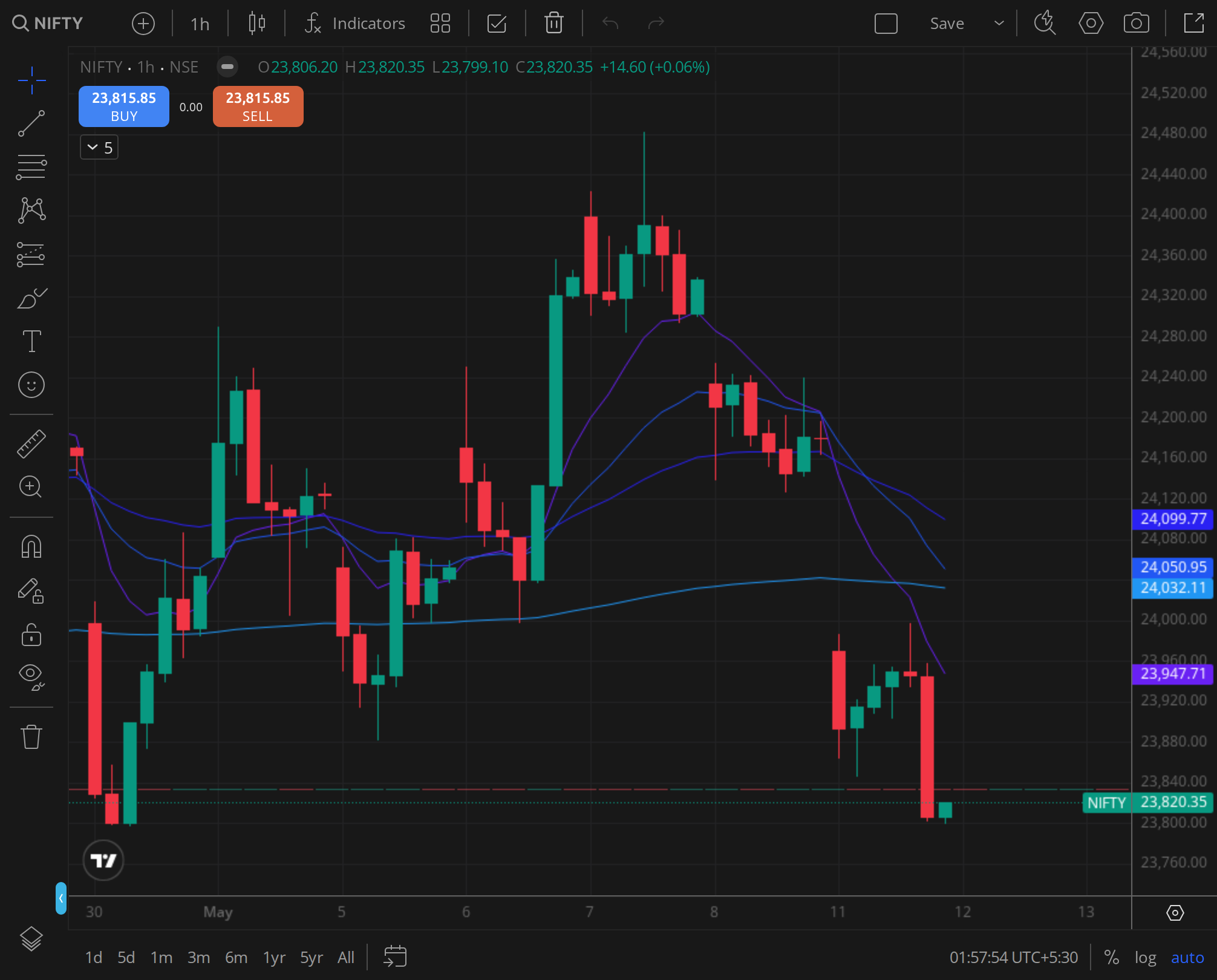
Caption: NIFTY 30min timeframe around 2026-03-26.
The session unfolded against a backdrop of low realised volatility. From early March, the Nifty had oscillated in a narrow 300-point range, and the VIX had drifted from 13.5 to 14.2. Option sellers, emboldened by the absence of tail risks, had aggressively sold out-of-the-money strangles on both sides of the weekly and monthly expiries. The March 26 weekly expiry, which coincided with the monthly futures and options expiry for March, was widely expected to be a non-event. Instead, it became the most disruptive expiry of the quarter.
This lookback examines how the setup evolved, why the VIX spike caught most desks flat-footed, and what the episode revealed about positioning for the following week.
What set up the expiry, OI buildup pattern
The calm that preceded March 26 was deceptive but structurally significant. Between March 5 and March 20, the Nifty 50 index traded in a band of 22,950 to 23,250, with average daily true range shrinking to 0.6%, the lowest in six months. The Bank Nifty was even tighter, oscillating between 49,200 and 49,800.
Option chain data from that period showed a clear pattern: open interest (OI) accumulated heavily at the 23,000 and 23,500 strikes on the call side, and at 22,800 and 22,500 on the put side. By March 20, the 23,000 call had OI of 1.12 crore shares, while the 22,800 put had 0.94 crore. This was a classic short-vol strangle setup: traders were selling premium at strikes that seemed safely out of reach, collecting theta while assuming the range would hold.
The VIX futures curve was in contango, with the front-month contract at 14.1 and the second-month at 15.3. Short-volatility desks, including proprietary trading firms and a handful of retail algo operators, had built substantial short gamma positions. The net short gamma in the Nifty option chain, as measured by the aggregate gamma exposure at strikes within one standard deviation, had risen to ₹1,200 crore by March 24, the highest level since January.
FII derivative positioning during this period was bearish but not extreme. Foreign institutional investors held a net short of 1.12 lakh contracts in index futures as of March 20, a modest increase from 0.95 lakh a week earlier. Retail, by contrast, was net long in index futures, with a net long position of 0.78 lakh contracts. The divergence was clear: FIIs were hedging or speculating on downside, while retail was leaning into the range-bound optimism.
The VIX itself, however, was not reflecting any stress. It had been range-bound between 13.2 and 14.5 for three weeks. Implied volatility on at-the-money options was at 13.8%, while realised volatility over the prior 10 days was just 9.2%. That gap, the IV-RV spread, was unusually wide, but traders interpreted it as a premium worth selling.
The March 26 VIX spike: what happened
On March 26, the Nifty opened at 23,180, roughly flat from the previous close. By 10:30 AM, it had dipped to 23,080, a modest 0.4% decline. Nothing alarming. But then, at 11:15 AM, a sharp sell-off in heavyweight stocks, led by HDFC Bank and Reliance, pushed the index to 22,940 within 45 minutes. That was a 1.2% intraday drop.
The VIX responded instantly. From 14.8 at the open, it shot to 16.4 by 12:30 PM, an 18% spike. The move was amplified by a cascade of margin calls. As the VIX rose, the margin requirement for short option positions increased. Traders who had sold strangles at strikes like 23,500 call and 22,500 put now faced margin shortfalls. Many were forced to buy back options, which pushed implied volatility even higher.
The 23,000 call, which had OI of 1.12 crore shares on March 24, saw its IV jump from 14.2% to 19.8% within two hours. The 22,800 put IV rose from 15.1% to 21.3%. The short-vol squeeze was violent. By the close, the Nifty had recovered slightly to 23,050, but the damage to option sellers was done.
Margin calls hit an estimated 15% of all Nifty 50 F&O positions, according to exchange-level data on margin utilisation. The spike was particularly acute in the Bank Nifty, where the VIX-equivalent index (Bank Nifty VIX) surged 22% to 18.9. Bank Nifty option sellers had been even more complacent, with short strangles at 49,500 call and 49,000 put accumulating OI of 0.85 crore and 0.72 crore respectively.
Strike pinning behavior and max-pain accuracy
The March 26 expiry was a weekly as well as a monthly expiry for March. Max pain for the Nifty on that day was calculated at 23,100 based on OI concentration at the open. The actual settlement price, determined by the closing spot on March 26, was 23,050. That was 50 points below max pain, a deviation that was unusual for a monthly expiry.
Typically, max pain acts as a magnetic anchor, with the index settling within 10-20 points of it. The 50-point deviation indicated that the VIX spike had disrupted the normal pinning process. Option writers, who usually have the incentive to defend max pain, were too busy covering their short positions to exert price pressure. The result was a settlement that favoured put buyers and punished call sellers.
The Bank Nifty settled at 49,380, while max pain was 49,500. Again, a 120-point deviation. The pattern was consistent: the volatility shock had overwhelmed the usual expiry mechanics.
Max pain accuracy, which had been above 85% for the prior four weekly expiries, dropped to 62% on March 26. This was a clear signal that the market was no longer in a controlled, low-volatility regime.
PCR + IV crush dynamics
The put-call ratio (PCR) on volume had been rising through March, from 0.72 on March 5 to 0.89 on March 24. That suggested increasing put buying, but the OI-based PCR remained stubbornly low at 0.58, indicating that most of the put activity was intraday or short-dated. The divergence between volume PCR and OI PCR was a classic sign of hedging rather than directional conviction.
On March 26, the volume PCR spiked to 1.15 as traders rushed to buy puts for protection. The OI PCR, however, barely moved to 0.62. That meant the put buying was mostly for the weekly expiry, not for longer-dated positions. The IV crush that followed the spike was asymmetric: call IVs fell faster than put IVs after the initial shock. By March 27, the 23,000 call IV had dropped back to 15.2%, while the 22,800 put IV remained elevated at 18.6%. The volatility risk premium had shifted from being sold to being bought, but only on the downside.
The PCR progression over the period told a story of increasing fear. From March 5 to March 26, the volume PCR rose from 0.72 to 1.15, a 60% increase. The OI PCR rose from 0.48 to 0.62, a more modest 29%. The divergence suggested that while retail was actively hedging, institutional players were not adding structural put positions. This was consistent with FIIs already being net short futures.
FII vs retail positioning divergence
The most telling data point from the March 26 episode was the divergence in positioning between foreign institutional investors and retail traders. As of March 25, FIIs held a net short of 1.35 lakh contracts in index futures, the highest since December. Retail, on the other hand, was net long 0.91 lakh contracts.
This asymmetry was dangerous. When the VIX spiked, retail long positions in futures came under pressure from margin calls on their option books. Many retail traders were simultaneously long futures and short options, a double exposure that amplified losses. FIIs, being net short futures, benefited from the index decline. Their derivative positioning had correctly anticipated the move.
Post-spike, FIIs added to their short positions, reaching a net short of 1.48 lakh contracts by March 27. Retail reduced their longs to 0.62 lakh contracts. The divergence narrowed but did not reverse. The message was clear: smart money had been positioned for a volatility expansion, while the crowd was caught leaning the wrong way.
The VIX futures curve also reflected this. After March 26, the contango flattened. The front-month VIX future settled at 16.8, while the second-month was at 17.1, a spread of just 0.3 points. That was down from 1.2 points before the spike. A flatter curve indicated that the market was pricing in sustained volatility, not a quick reversion to calm.
Verdict: what the expiry told us about the following week
The March 26 expiry was a watershed. It broke the low-volatility regime that had persisted since January. The VIX spike, the margin calls, and the deviation from max pain all pointed to a market that was transitioning from range-bound to trending.
For the following week (March 27 to April 2), the data suggested that the bias would remain bearish. The FII short position was large and growing. The PCR on volume had not reverted to pre-spike levels, indicating that hedging demand was sticky. The VIX remained above 16, which historically had been a level associated with corrections of 2-3% over the subsequent five sessions.
Moreover, the OI buildup after the spike showed that new put writing was concentrated at 22,800 and 22,500, while call writing was minimal above 23,200. That indicated that option sellers expected the downside to be protected but saw limited upside. The max pain for the next weekly expiry (April 2) shifted to 22,950, further confirming a lower bias.
The Nifty did, in fact, decline over the next week. From the March 26 close of 23,050, it fell to 22,810 by April 2, a loss of 1.0%. The VIX remained elevated at 15.8, and the PCR on OI finally rose to 0.68, indicating that put positions were being rolled forward.
The March 26 spike was not a one-off. It was the release valve for a system that had become too complacent. The lesson for F&O desks was clear: when everyone is selling volatility, the volatility will eventually find a buyer.
VERDICT: BEARISH | Horizon: 1,2 weeks
The March 26 VIX spike broke the structural calm that had underpinned short-vol strategies. The combination of rising FII short positions, elevated PCR, and a VIX that refused to mean-revert quickly pointed to further downside. The market had entered a phase where volatility expansion, not contraction, was the dominant regime. For the week ending April 2, the bias was bearish, with a target of 22,800 on the Nifty and a stop above 23,200. The expiry had spoken, and the message was not kind to the bulls.