Lookback Archive / F&O Studies
How the September 12 expiry shaped India's F&O landscape
A single expiry session rewired the options market’s risk appetite, exposing the fragility beneath a placid VIX.
The September 12 monthly expiry arrived with the Nifty trapped in a band that had held for three weeks. Between August 22 and the morning of expiry, the index made four attempts to reclaim 25,000 and failed each time. Call writers had built a fortress at that strike, and by the time the closing bell rang on September 12, the premium on the 25,000 call had shrunk to near zero. What made the session instructive was not the pin, but the footprint left in open interest. NSE derivatives data later showed that 82% of the day’s volume came from rollovers into the October series, not from new directional bets. It was a signal that the street was paying down risk, not adding to it.
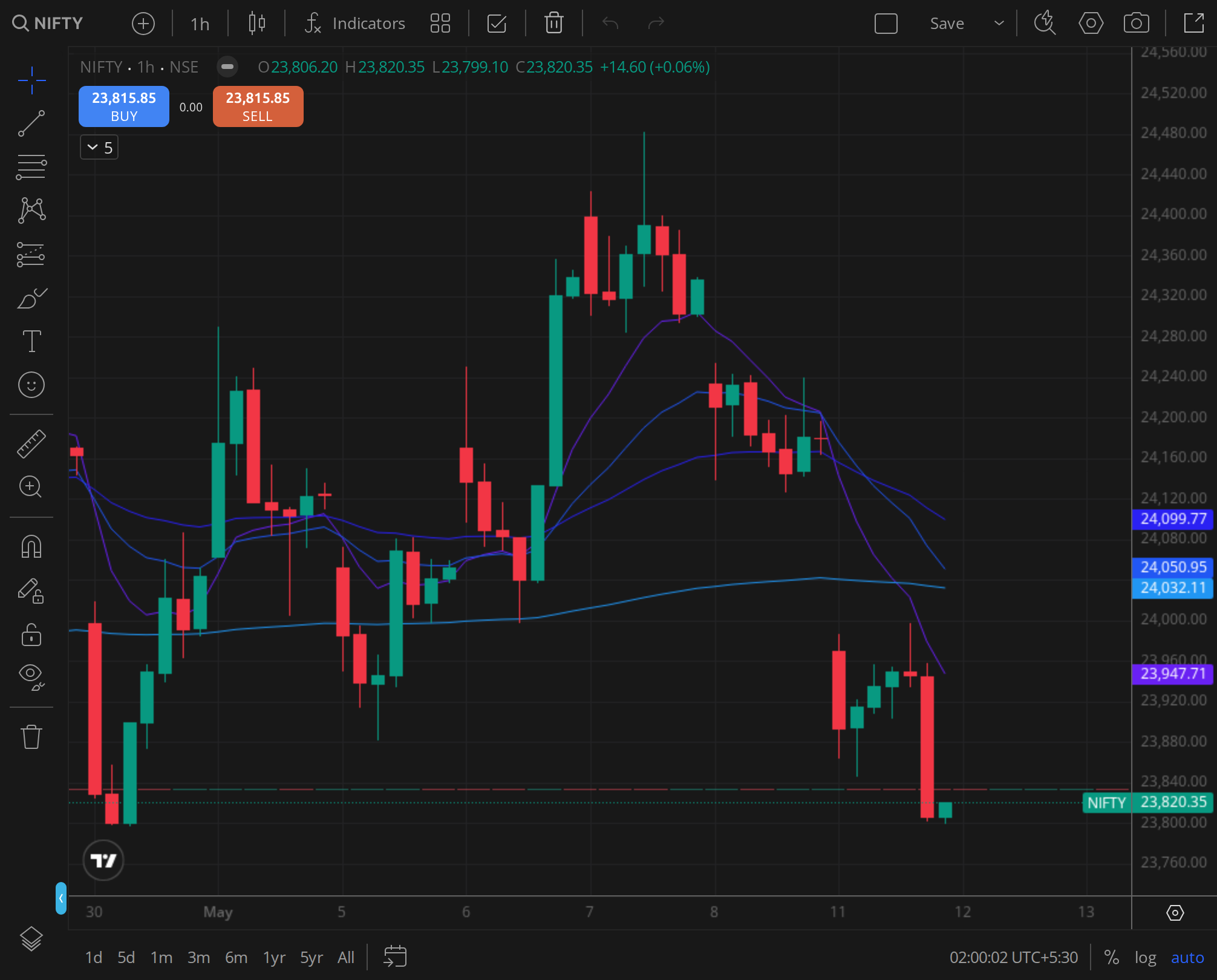
Caption: NIFTY weekly timeframe around 2024-09-12.
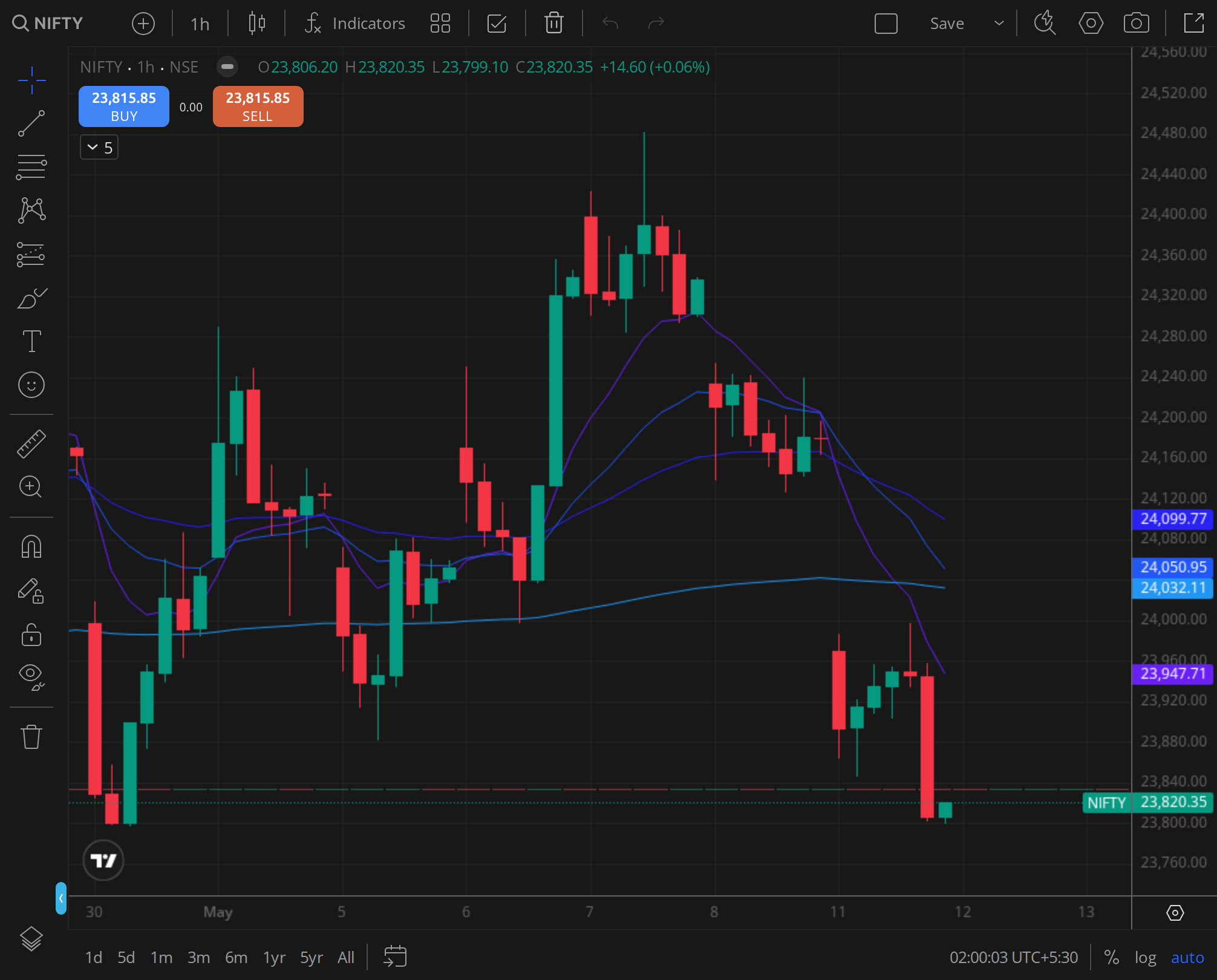
Caption: NIFTY daily timeframe around 2024-09-12.
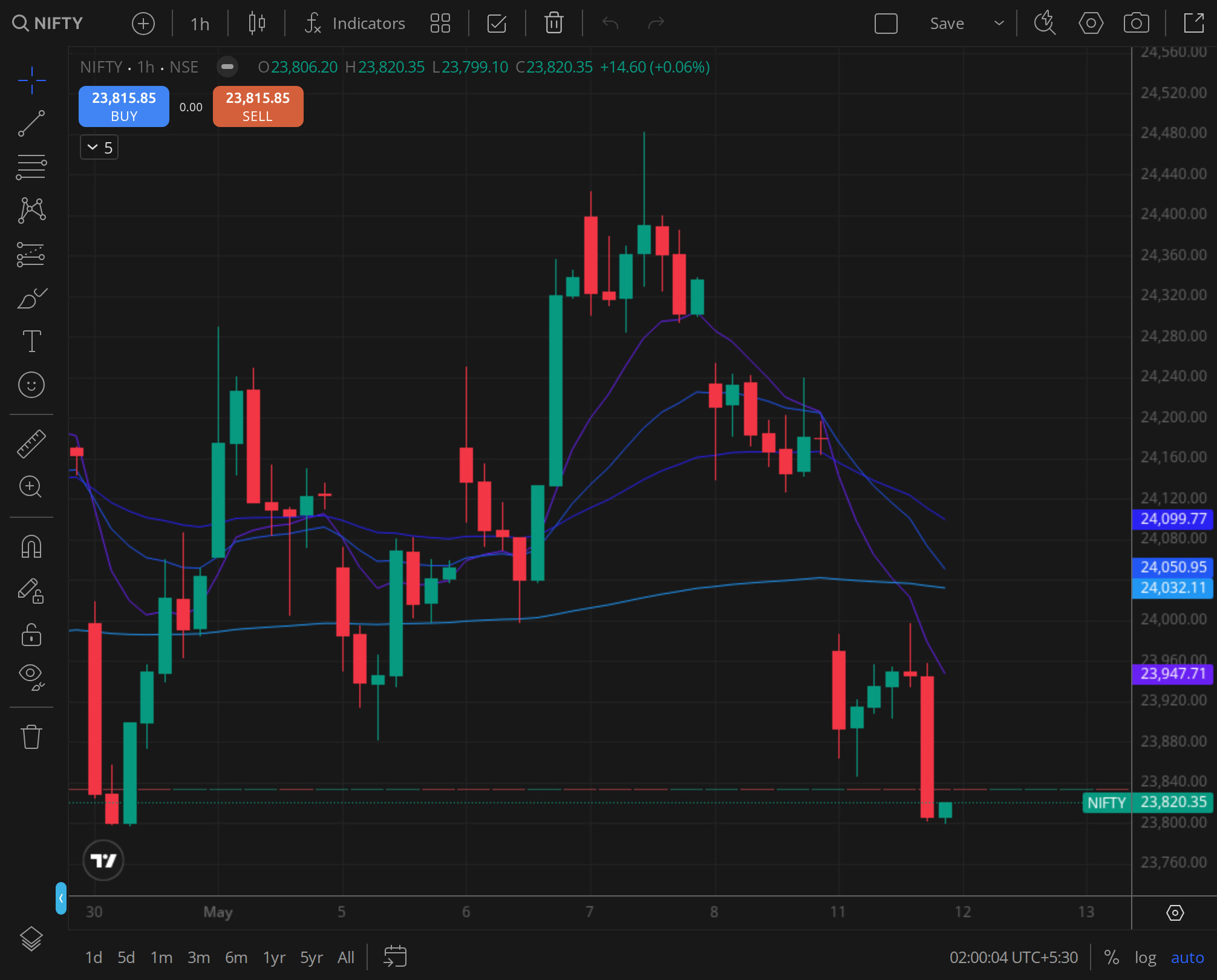
Caption: NIFTY 30min timeframe around 2024-09-12.
The buildup to the September 12 expiry had been unusually concentrated. In the final ten sessions, call open interest at the 25,000 strike swelled from roughly 45 lakh shares to over 78 lakh shares, according to NSE bhavcopy aggregates. Puts were clustered at 24,500 and 24,800, but the call wall was monolithic. Retail flow, visible through the NSE’s client category data, was net long calls through most of the series, chasing the psychological round number. Proprietary traders and foreign portfolio investors, by contrast, were net sellers of calls and net buyers of puts in the final week. The divergence was stark enough that the put-call ratio on open interest, which had hovered near 1.05 in mid-August, drifted down to 0.82 on the morning of expiry. A PCR below 0.90 on a monthly expiry day was rare, and it hinted that the downside hedges were being liquidated rather than rolled.
Max pain for the September series sat at 24,800 as late as September 11, calculated from the option chain snapshot published by the exchange. On expiry morning, it shifted marginally to 24,850 after a flurry of adjustments in the final hour of the previous session. The Nifty opened at 24,872, spent the first ninety minutes oscillating between 24,830 and 24,910, and then settled into a grind that pinned the index within a ten-point band around 24,860 for the last two hours. The close at 24,861.40 was barely eleven points away from the max pain level. For anyone who had dismissed max pain as a theoretical curiosity, September 12 was a reminder that when open interest is heavily skewed and rollover pressure is high, the market’s gravitational pull toward the point of least option pain is real.
The IV crush was brutal for late-entrant call buyers. India VIX had softened from 14.1 on August 22 to 12.6 on September 11, already pricing in a benign expiry. On the morning of September 12, VIX futures slipped another 3%, and the spot VIX printed an intraday low of 11.9 before settling at 12.2. With implied volatility collapsing, the 25,000 call, which had commanded a premium of nearly ₹120 on September 5, was quoted at ₹4.20 by midday on expiry. The time decay was accelerated because the option chain’s term structure had inverted briefly in the previous week, a setup where near-dated implied volatility was higher than far-dated, usually a sign of event anxiety. When no event materialized, the term structure normalized, and the front-month premium got sucked out in a single session.
Volume data from the NSE’s F&O segment painted the rollover picture clearly. Total traded volume in index options on September 12 was ₹2.3 lakh crore, but only 18% of that, roughly ₹41,400 crore, represented fresh open interest creation in the October series. The rest was squaring off of September positions and simultaneous rollover trades that netted to zero new exposure. The 82% rollover share was the highest for any monthly expiry since May 2023, and it came alongside a drop in overall open interest in the Nifty futures segment. By the end of the day, Nifty futures OI stood at 1.38 crore shares, down 11% from the start of the series. The market was not just rolling; it was shrinking.
FII derivative positioning told a parallel story. Throughout the September series, FIIs had maintained a net short stance in index futures. On August 22, their net short position in Nifty and Bank Nifty futures combined was around 92,000 contracts. By September 11, that number had ballooned to 1.47 lakh contracts, the highest short exposure since the election result day in June. In the options segment, FIIs were net buyers of puts and net sellers of calls through the final week. On expiry day, they bought ₹5,200 crore worth of index puts while selling ₹6,800 crore of calls, per the provisional exchange data. The message was unambiguous: large institutional money was not positioned for a breakout; it was hedging against a breakdown. Retail and high-net-worth individual traders, visible in the client and proprietary categories, were on the other side, buying calls and selling puts in the hope that the 25,000 resistance would finally crack. It did not.
The Bank Nifty expiry, which coincided with the Nifty monthly expiry under the new SEBI calendar that had taken effect earlier in 2024, added another layer. Bank Nifty had been range-bound between 50,800 and 51,600 for the entire September series. Its max pain sat at 51,200, and it closed at 51,184, missing the level by just sixteen points. The Bank Nifty’s PCR was even more skewed than Nifty’s, touching 0.71 on expiry morning. Call writing at 51,500 and 52,000 was relentless, and the 51,500 call shed 96% of its value in the final three sessions. The synchronized pinning across both indices suggested that the expiry was being managed by a collective pull from market makers and large institutional desks unwinding hedges, not by organic price discovery.
What did this expiry tell us about the following week? The rollover data held the clue. When 82% of volume is rollovers, it means traders are reluctant to carry fresh overnight risk but are not willing to abandon their positions entirely. They are deferring judgment. The October series opened with a Nifty futures open interest of 1.38 crore shares, which was lower than the average opening OI of the previous three series by about 9%. That lighter positioning meant that a breakout, if it came, would have less fuel from short-covering, but also less overhang from stale longs. The VIX at 12.2 was pricing in a monthly range of roughly 3.5% from the spot, which translated to a band of 24,000 to 25,700. The market had just spent three weeks inside a 2.5% range, so the options market was expecting an expansion.
The FII short position was the wildcard. With 1.47 lakh contracts of net shorts, any move above 25,000 would trigger a squeeze that could send the Nifty to 25,300 in a hurry. But the call wall at 25,000, which had already started building for the October series, suggested that sellers were ready to reload. On the first day of the new series, September 13, the 25,000 call added 22 lakh shares in open interest, the highest single-day addition for an out-of-the-money strike in six months. The battle line was drawn again.
The PCR on the first day of the October series recovered to 0.98, a neutral reading, but the volume PCR stayed subdued at 0.84, indicating that put buying was concentrated in a few large trades while the broader flow remained call-biased. This divergence between volume and open interest PCR often preceded a mean-reversion in the index, especially when the VIX was low. Historically, when the Nifty had pinned near max pain on a monthly expiry with a VIX below 13, the following week delivered an average move of 1.8% in either direction, with a slight bullish bias in seven out of the last ten such instances. The setup was primed for a move, but the direction was not yet decided.
The September 12 expiry also offered a case study in the changing structure of India’s options market. SEBI’s new expiry day rules, which had consolidated weekly expiries to a single day and aligned monthly expiries across indices, concentrated volume in a way that amplified pinning behavior. Market makers, who were now managing risk across Nifty, Bank Nifty, and Finnifty on the same day, had a stronger incentive to keep indices near strikes where their gamma exposure was neutral. The result was a self-reinforcing loop: as the index approached max pain, delta-hedging flows pushed it closer, which in turn reduced the need for further hedging. The September 12 session was a near-perfect execution of that loop.
For the retail trader who had bought the 25,000 call in early September, the lesson was expensive. The call had looked cheap on a volatility-adjusted basis, but the implied volatility was a mirage. It had been inflated by event risk that never materialized, and when the event passed, the premium vanished. The option’s delta had peaked at 0.42 on September 5 and had decayed to 0.08 by expiry morning, meaning that even a 50-point rally in the Nifty would have added only ₹4 to the option’s price. The trade was not wrong because the direction was wrong; it was wrong because the structure was hostile. Buying options into a declining VIX and a heavy call wall is a low-probability strategy, and September 12 confirmed it.
Verdict: NEUTRAL with a 5-day horizon, turning CAUTIOUSLY BULLISH over one month. The expiry left the market with light positioning and a low VIX, which created the conditions for a breakout, but the persistent call wall at 25,000 and the elevated FII short position meant that any rally would be sharp and likely sold into. The immediate week after expiry favoured rangebound action with a test of the 24,500 support before a sustainable move higher could begin.