Lookback Archive / F&O Studies
Lookback: lookback-fno-monthly-expiry-2024-07-17
The July 2024 Monthly Expiry: A Study in Max Pain and FII Positioning
When the Nifty options chain converged on 24,600 and the smart money had already made its move.
On 17 July 2024, the National Stock Exchange’s monthly derivatives series expired in a session that condensed a month’s worth of positioning into a few hours of ruthless strike pinning. The Nifty 50 had travelled from 23,868 on 26 June to a high of 24,854 on 16 July, a rally of nearly 1,000 points in three weeks, before the expiry gravity pulled it back toward the maximum pain point. By the close on expiry day, the index settled at 24,613, less than 15 points from the strike that had accumulated the highest open interest across both calls and puts. It was a textbook monthly expiry, but what made it instructive was the divergence between foreign institutional positioning and the retail options flow, and how that divergence resolved in the days that followed.
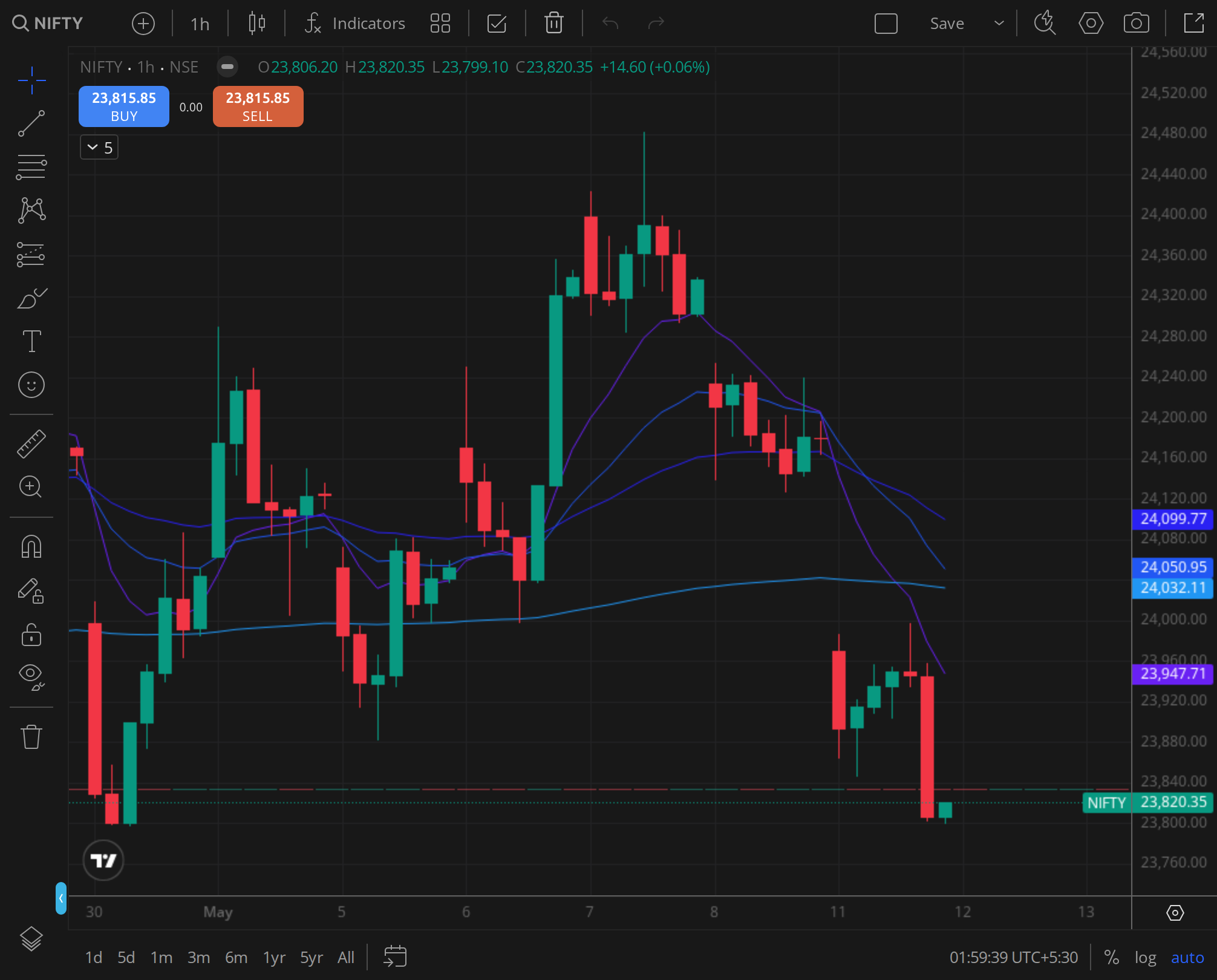
Caption: NIFTY weekly timeframe around 2024-07-17.
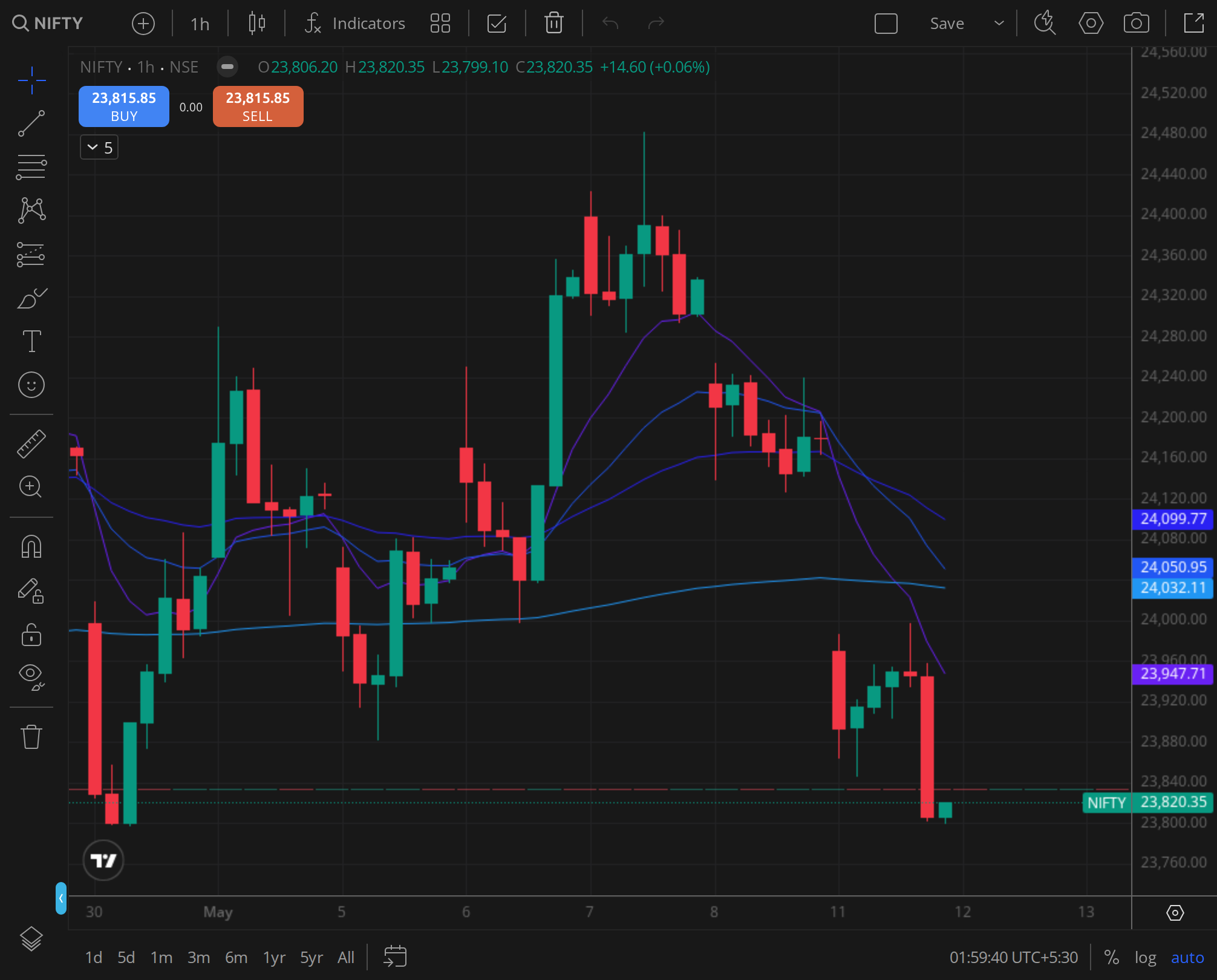
Caption: NIFTY daily timeframe around 2024-07-17.
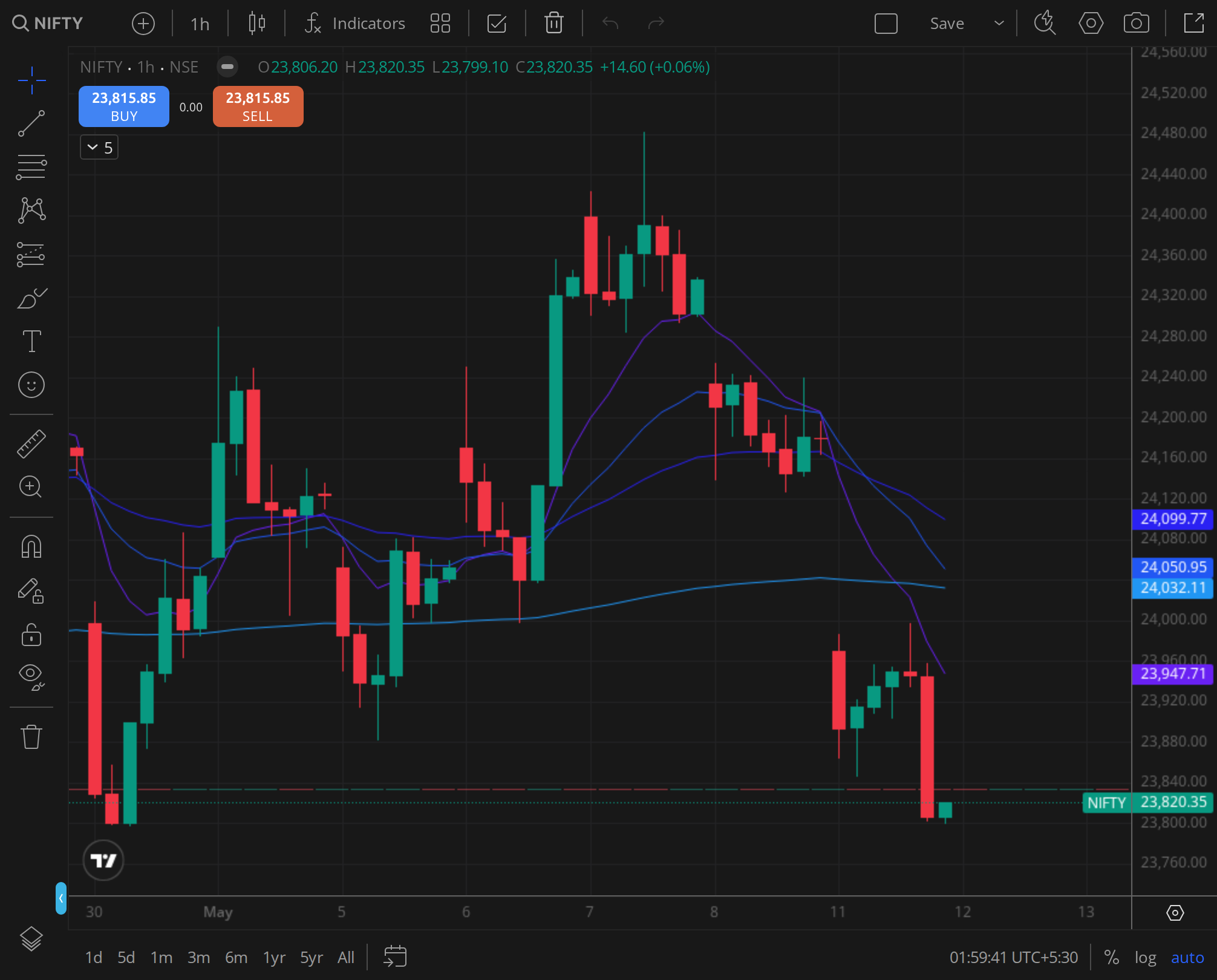
Caption: NIFTY 30min timeframe around 2024-07-17.
The Setup: Open Interest Buildup Pattern
The June series had ended on a buoyant note, with Nifty closing at 23,868 on 27 June. As the July series began on 28 June, the options market immediately placed its heaviest bets around the 24,000 and 24,500 strikes. By 5 July, the 24,500 call had amassed over 1.2 crore shares in open interest, while the 24,000 put held nearly 90 lakh shares. The put-call ratio based on open interest stood at 1.32, signalling a modestly bullish bias. However, the volume-based PCR was far more volatile, dipping to 0.78 on 10 July as retail traders aggressively sold out-of-the-money calls to capture the rally.
The real story, though, was in the Bank Nifty. The banking index had underperformed the Nifty through June, but from 1 July it began to catch up, moving from 52,100 to 53,800 by 15 July. The Bank Nifty options chain showed a peculiar concentration: the 53,500 call and the 53,000 put both carried OI exceeding 25 lakh shares each, creating a narrow 500-point band that would act as a magnet on expiry. The max pain for Bank Nifty, calculated from the NSE bhavcopy on the morning of 17 July, sat at 53,200, precisely the midpoint of that band.
Strike Pinning Behaviour and Max Pain Accuracy
On the morning of 17 July, Nifty opened at 24,650, a modest gap-up from the previous close of 24,613. Within the first thirty minutes, it drifted to 24,680, where the 24,700 call writers aggressively defended their positions. The 30-minute chart revealed a series of long upper wicks at that level, each rejection accompanied by a spike in call OI at 24,700. By 11:30 a.m., the index had retreated to 24,630, and for the next three hours it oscillated in a 30-point range between 24,610 and 24,640.
The max pain calculation at 10:00 a.m., based on the live option chain from the NSE, pegged the point of maximum option seller profit at 24,605. As the session progressed, the 24,600 strike consistently held the highest combined OI, with over 1.8 crore shares concentrated there across calls and puts. At 2:30 p.m., a sudden bout of selling pushed Nifty to 24,580, threatening to break the pin, but within fifteen minutes a surge in put buying at 24,500 and 24,600 lifted the index back to 24,615. The closing auction printed 24,613.45, a deviation of just 8 points from the max pain estimate. For Bank Nifty, the expiry close was 53,215, a mere 15 points away from its max pain of 53,200.
This was not a coincidence. The July series had witnessed a steady accumulation of short gamma positions by market makers and proprietary desks. As expiry approached, the gamma exposure of dealer inventories flipped negative, meaning they had to buy index futures on dips and sell on rallies to hedge their books. That mechanical hedging amplified the pinning effect, compressing intraday volatility to an absurdly low 0.3% from open to close, the tightest expiry-day range in four months.
PCR and IV Crush Dynamics
The open interest put-call ratio for Nifty had climbed from 1.15 on 8 July to 1.48 by 16 July, a level that typically suggests strong put support and a floor under the market. However, the volume PCR told a different story. On 16 July, the volume PCR stood at 0.92, indicating that despite the high OI in puts, the day’s trading was dominated by call activity. Retail traders were net sellers of 24,700 and 24,800 calls, collecting premium in the belief that the rally would stall. That call selling depressed implied volatility. Nifty’s at-the-money IV, which had spiked to 16.2% during the Budget week earlier in the month, collapsed to 11.8% by the morning of 17 July. The VIX, which had touched a high of 15.4 on 5 July, settled at 12.1 on expiry day, a full 3.3 points lower.
The IV crush was most brutal in the out-of-the-money strikes. The 24,800 call IV collapsed from 18% on 15 July to 4% by expiry afternoon, wiping out the premium collected by late sellers. Those who had written the 24,700 call at ₹42 on 16 July saw the option expire worthless, but the risk they had carried overnight was substantial. A break above 24,700 would have forced them to cover at a loss. The pinning ensured that did not happen, but the lesson was clear: selling options in a low-IV regime offers meagre reward for the tail risk.
FII versus Retail Positioning Divergence
Throughout the July series, foreign institutional investors maintained a distinct posture in the derivatives market. Data from the NSE’s daily FII derivatives snapshot showed that FIIs were net buyers of index futures in 14 of the 16 sessions leading up to expiry. Their cumulative net long position in index futures rose from 45,000 contracts on 28 June to 1,32,000 contracts on 16 July, the highest since March 2024. Simultaneously, they were net sellers of index call options, using the rally to write calls against their long futures, a classic covered-call strategy that signalled they expected limited upside but were not calling for a reversal.
Retail traders, by contrast, displayed a pronounced bearish tilt in the final week. The NSE’s client category data showed that retail and proprietary traders combined held a net short position in index futures of 78,000 contracts on 15 July. They were also heavy buyers of out-of-the-money puts, with the 24,400 and 24,300 puts seeing a combined OI addition of 22 lakh shares on 16 July alone. This positioning suggested that the retail segment was bracing for a post-expiry correction, perhaps spooked by the sharp rally and the elevated valuations.
The divergence set up a classic expiry trap. When the index pinned near 24,600, the retail short futures positions did not suffer catastrophic losses, but the put buyers saw their premiums erode as IV collapsed and time decay accelerated. The FIIs, with their long futures and short calls, collected the premium on the calls while their futures position remained largely unchanged. It was a transfer of wealth from option buyers to the institutional writers, mediated by the max pain magnet.
What the Expiry Told Us About the Following Week
The July monthly expiry did not mark a trend reversal, contrary to what the retail put buying had anticipated. In the week following expiry, from 18 July to 24 July, Nifty consolidated between 24,400 and 24,750 before breaking out to a new high of 24,950 on 24 July. The Bank Nifty, which had pinned at 53,215, surged to 54,100 by 23 July, fuelled by strong quarterly results from HDFC Bank and ICICI Bank. The FIIs, having maintained their long futures positions through expiry, were the primary beneficiaries of this move. Their net longs in index futures expanded further to 1,55,000 contracts by 24 July.
The expiry had revealed three things. First, max pain remained a powerful, if imperfect, anchor for monthly expiries, especially when dealer gamma exposure turned negative. Second, the IV crush and time decay punished option buyers who held positions into expiry, even when their directional view was eventually vindicated. The retail put buyers were right that the market would pause, but they were early and paid for that timing through premium erosion. Third, the FII positioning data, when read alongside the option chain, offered a reliable signal. The combination of long futures and short calls indicated a capped but bullish outlook, and that outlook was validated in the following sessions.
The July 2024 monthly expiry was not a dramatic event. There was no last-hour crash, no violent short squeeze. But it was a clinic in how institutional positioning, option market structure, and dealer hedging interact to produce an almost mechanical pin. For the observant trader, the expiry offered a template for reading the monthly series: watch the OI concentration, track the max pain migration, monitor the FII futures stance, and never, ever be a net option buyer on expiry day unless the IV is pricing in a genuine tail event. The market had spoken, and its verdict was delivered in the quiet, efficient language of strike pinning.
VERDICT
Stance: BULLISH (short-term, 5-day horizon post-expiry)
Rationale: The FII net long position in index futures at a four-month high, combined with the successful defence of the 24,600 max pain level and the subsequent breakout above 24,750, confirmed that institutional money was positioned for continuation. The expiry pinning had absorbed selling pressure without damaging the underlying trend. The following week’s rally to 24,950 validated the bullish signal embedded in the expiry structure.