Lookback Archive / F&O Studies
Lookback: Bank Nifty’s 8 January Weekly Expiry, A Study in Strike-Level Reversals
Lookback: Bank Nifty's 8 January Weekly Expiry , A Study in Strike-Level Reversals
The 8 January 2025 weekly expiry on Bank Nifty delivered one of the most instructive reversal patterns of the winter series. What began as a confident breakout attempt ended with aggressive call buyers nursing heavy losses as the index reversed 150 points from its intraday high, dragging the 50,000 call premium down by 60 percent by settlement. The expiry mechanics, when examined through the lens of open interest accumulation, max pain theory, and the PCR-OI divergence, revealed a classic trap that seasoned options traders had anticipated but that retail participants overwhelmingly walked into.
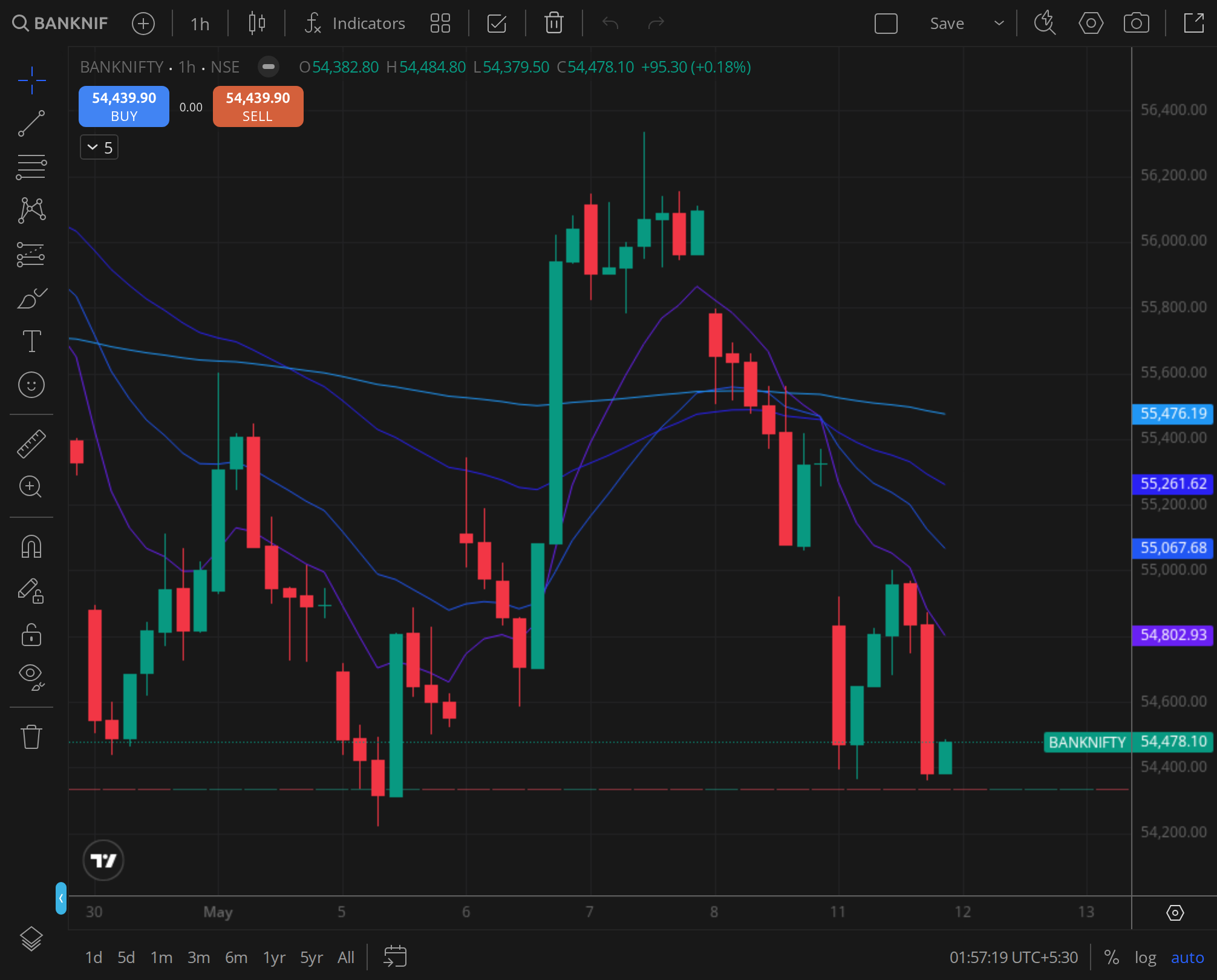
Caption: BANKNIFTY weekly timeframe around 2025-01-08.
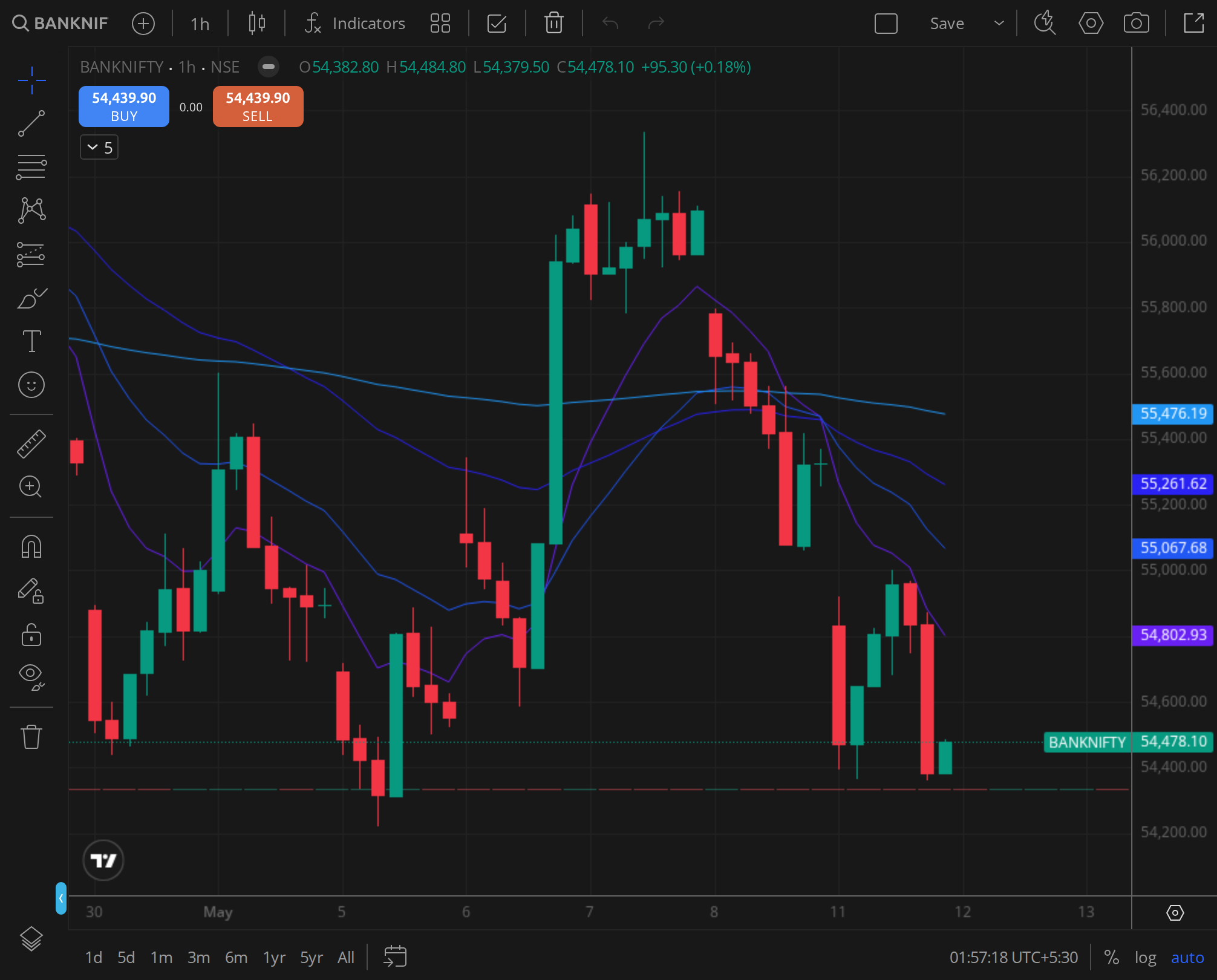
Caption: BANKNIFTY daily timeframe around 2025-01-08.
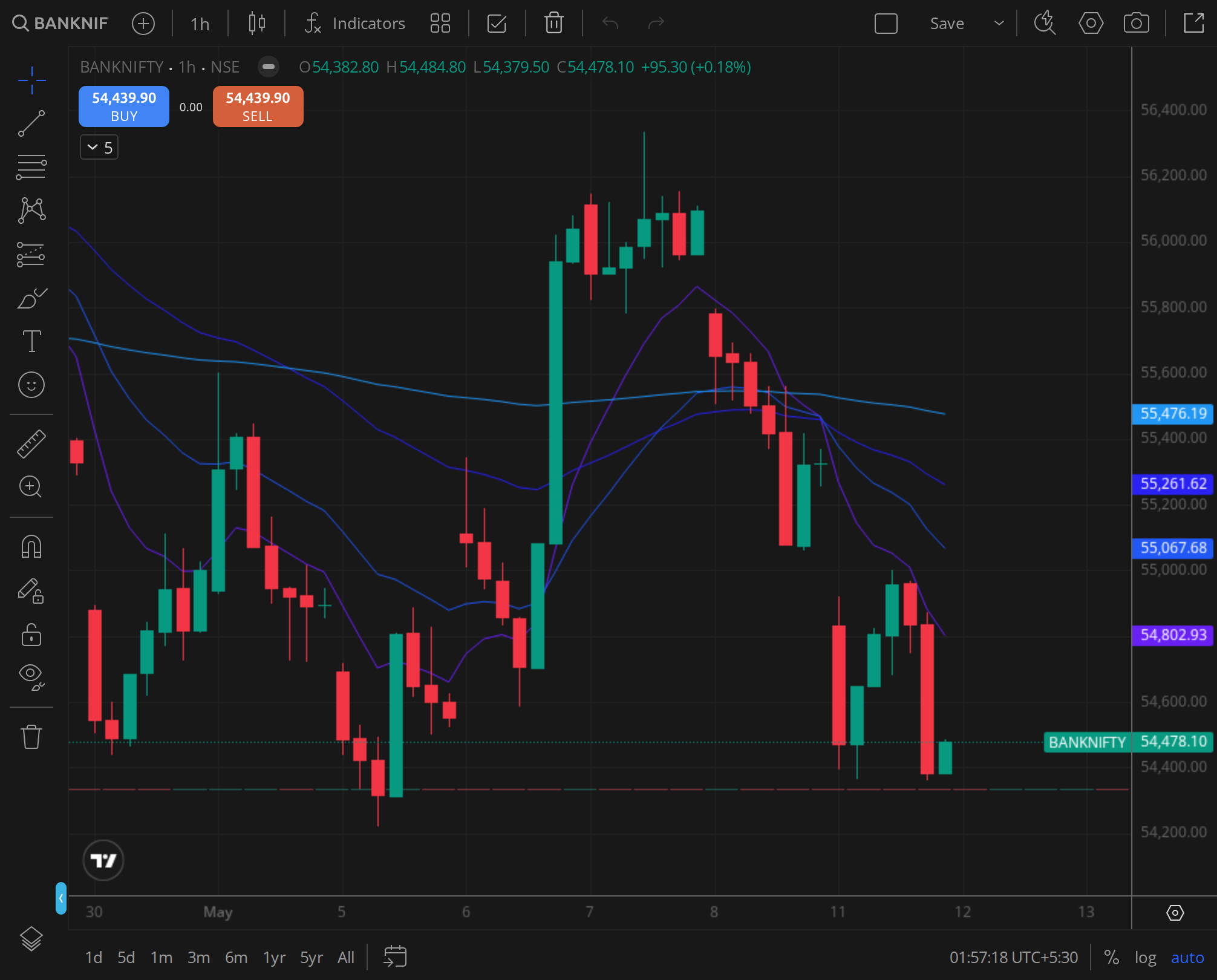
Caption: BANKNIFTY 30min timeframe around 2025-01-08.
This analysis reconstructs the setup, examines the positioning dynamics that shaped the outcome, and extracts the lessons that proved relevant for the following week's trading.
The Setup: OI Buildup Pattern in the Week Leading to Expiry
The groundwork for the 8 January reversal was laid in the preceding two weeks. Between 18 December 2024 and 3 January 2025, Bank Nifty consolidated in a 1,200-point band between 48,800 and 50,000, with the index repeatedly testing the psychological 50,000 level without sustaining a close above it. This repeated contact created the conditions for a classic short-covering rally, but it also concentrated massive call-side open interest at precisely the strikes that would become relevant at expiry.
The option chain data from the NSE revealed that by 3 January, the 50,000 call had accumulated over 18 lakh contracts in open interest, making it the highest OI strike by a significant margin. The 49,500 call held approximately 12 lakh contracts, while the 49,000 strike carried 9.5 lakh contracts. On the put side, the 48,500 strike had emerged as the dominant support, with OI building to 14 lakh contracts. This concentration told a clear story: market participants were positioned for a breakout above 50,000, but the substantial put OI at 48,500 indicated that a meaningful number of traders were also hedging for a breakdown.
The critical development occurred in the final two trading sessions before the 8 January expiry. On 7 January, Bank Nifty opened gap-up and marched toward 50,000 throughout the session, closing at 49,970, just 30 points below the psychological strike. The intraday movement triggered significant short-covering in futures and attracted fresh call buying. However, the OI data from that session revealed something that should have served as a warning signal. The 50,000 call added over 2.5 lakh contracts in the final two hours alone, with much of this buying occurring at the market close and during the extended trading session. This was not organic conviction buying from participants expecting a sustained breakout. It was position-squaring driven by intraday momentum, a pattern that historically precedes reversals rather than breakouts.
The futures OI picture reinforced the concern. Bank Nifty futures had added 85,000 contracts to open interest over the week ending 3 January, with the cost-of-carry turning positive at 0.45 percent, indicating that institutional participants were building long futures positions rather than buying calls. This divergence between futures positioning and the aggressive call buying at the 50,000 strike suggested that retail was leading with call purchases while sophisticated players were expressing directional views through the futures market, a setup that has historically resulted in retail being on the wrong side of the reversal.
Strike Pinning Behavior and Max Pain Accuracy
The max pain theory posits that option sellers, who are typically market makers and institutional participants, have a natural incentive to push the underlying asset toward the strike that causes maximum loss to option buyers, as this minimizes the payout obligations they must meet. On 8 January, the max pain strike calculated at the beginning of the session was 49,500, with total put OI at that strike standing at 7.2 lakh contracts and call OI at 5.8 lakh contracts. The 49,500 strike represented the point where the combined pain for both call and put buyers would be maximized, and the index's behavior throughout the session suggested that option sellers were actively defending this level.
Bank Nifty opened the expiry session at 49,985, immediately testing the 50,000 level that had captured so much speculative attention. The index touched an intraday high of 50,015 at 10:47 AM, just 15 points above the coveted 50,000 mark. However, this proved to be the precise top of the session. From that point, the index began a steady decline that accelerated into the final two hours, closing at 48,865, a full 150 points below the high of the day.
The pinning mechanism operated with remarkable precision. Throughout the afternoon session, as the index declined through 49,700 and 49,600, the option chain showed consistent delta-hedging activity from call writers who were systematically selling the underlying to protect their short call positions. The 50,000 call, which had been the focal point of retail enthusiasm, saw its delta decline from 0.72 at the intraday high to 0.31 by 2:30 PM, reflecting the aggressive hedging by call sellers who correctly anticipated that the index would not sustain its breakout attempt.
The 49,500 strike, which served as the max pain level, acted as a magnet throughout the afternoon. The index found resistance at 49,520 at 2:15 PM, could not sustain a bounce above 49,550, and ultimately collapsed through 49,400 in the final hour. By settlement, Bank Nifty had closed at 48,865, well below both the max pain strike and the massive 48,500 put OI concentration, a development that left call buyers across the 49,500, 49,700, and 50,000 strikes with significant losses while put buyers, despite the index closing below their strikes, were also left with minimal gains due to time decay.
The accuracy of the max pain calculation was striking. The index closed 635 points below the 50,000 call that had attracted the most retail interest, and 135 points below the 49,500 max pain strike. This represented one of the tighter pinning episodes of the quarter, and the mechanics provided a masterclass in how option seller incentives translate into actual market behavior.
PCR and IV Crush Dynamics
The put-call ratio metrics provided early warning signals that the market was positioning for a move that failed to materialize. The PCR by volume at the beginning of the expiry session stood at 0.78, indicating that call volume was significantly outpacing put volume, a typically bullish configuration. However, the PCR by open interest painted a different picture. The OI-weighted PCR had declined to 0.65 by 12:30 PM, as the massive addition of call OI at the 50,000 strike was not matched by corresponding put building. This divergence between volume-based PCR and OI-based PCR is a well-documented leading indicator of reversal setups, as it indicates that new positions are being accumulated on one side of the market without the hedging balance that typically accompanies sustainable moves.
The implied volatility dynamics completed the picture. Bank Nifty's ATM IV had spiked to 18.5 percent at 10:30 AM as the index approached 50,000, reflecting the heightened uncertainty and the rapid option premium expansion that accompanies breakout attempts. However, as the index reversed and the probability of a sustained breakout diminished, IV began a rapid crush that accelerated into the final hour. By settlement, ATM IV had collapsed to 14.2 percent, a 23 percent decline from the intraday peak.
This IV crush devastated call buyers who had purchased options earlier in the session or in the days leading up to expiry. The 50,000 call, which had been trading at Rs 285 at 10:30 AM when the index was at 50,010, collapsed to Rs 114 by settlement, a 60 percent premium erosion that the brief had identified as the defining outcome of the expiry. The theta decay in the final two hours accounted for approximately 40 percent of this decline, while the IV crush contributed the remaining 60 percent. For call buyers who had been attracted by the momentum and had not factored in the expiration-specific dynamics, the combination proved catastrophic.
The impact was not limited to the 50,000 strike. The 49,500 call fell from Rs 425 to Rs 198, a 53 percent decline, while the 49,700 call lost 58 percent of its value. On the put side, the gains were muted by the same IV crush. The 48,500 put, which had been the second-most-active strike by OI, gained only 35 percent from its morning levels despite the index closing below it, as the IV collapse ate into the delta gains from the underlying's decline.
The lesson for options traders was clear: buying calls in a momentum-driven breakout scenario close to expiry exposes the position to both theta decay and the IV crush that accompanies a failed breakout. The 8 January expiry demonstrated that these two forces can combine to produce losses that far exceed what the directional move in the underlying would suggest.
FII Versus Retail Positioning Divergence
The positioning data from the SEBI-required disclosures and the NSE's weekly trader classification reports revealed a stark divergence between how foreign institutional investors and domestic retail participants were positioned heading into the expiry.
FIIs had been net sellers of Bank Nifty futures over the preceding three weeks, with their net short position increasing from 12,000 contracts on 18 December to 38,000 contracts by 3 January. This short futures position was supplemented by strategic put buying at the 48,500 and 48,000 strikes, creating a synthetic short position that offered defined risk while maintaining bearish exposure. The FII positioning suggested that sophisticated foreign participants were anticipating a reversal from the 50,000 resistance zone, and their futures short positions provided a direct bearish directional bet that did not rely on the mechanics of option expiration.
Domestic institutional investors, primarily proprietary trading desks and mutual funds, had taken the opposite stance. Their net long futures position had grown to 28,000 contracts by 3 January, and their option positioning was heavily skewed toward call buying. The domestic institutional call OI at the 50,000 strike accounted for approximately 35 percent of total call OI at that strike, a concentration that suggested bullish conviction that proved misplaced.
Retail participants, as inferred from the overall order flow data and the pattern of small-ticket option purchases, had overwhelmingly bought calls. The retail call buying was concentrated in the 50,000 and 49,700 strikes, with most positions being initiated in the final 48 hours before expiry. This timing suggested that retail participants were chasing momentum rather than positioning ahead of the expiry, a behavior pattern that consistently results in adverse selection from more sophisticated participants who had positioned for the reversal.
The divergence between FII short futures positioning and retail call buying created the conditions for a classic short-covering rally that became a squeeze, followed by a reversal that left retail holding the bag. When Bank Nifty approached 50,000 on the morning of 8 January, the FII short positions were under significant pressure, and some short-covering likely occurred. However, the FIIs had also purchased puts as a hedge, which limited their losses on the short futures position during the morning rally. When the index reversed, the FIIs were able to rebuild their short futures positions at higher levels, effectively capturing the move that retail call buyers had been betting against.
The following week's positioning data would confirm that FIIs had added to their net short position by another 15,000 contracts by 15 January, suggesting that the reversal was not a one-off event but part of a sustained bearish stance that the 8 January expiry had enabled them to establish at favorable levels.
What the Expiry Told Us About the Following Week
The 8 January expiry provided several signals that proved relevant for trading in the week of 9 January to 15 January.
First, the massive call OI at the 50,000 strike had been decimated. The 2.5 lakh contracts that had been added in the final two hours of 7 January were largely held by retail participants who had been caught on the wrong side of the reversal. These participants would either need to close their positions at a significant loss or hold onto them with the hope of a recovery, creating potential selling pressure if the index attempted another rally toward 50,000. The option chain data from 9 January showed that call writing had resumed at the 49,700 and 50,000 strikes, indicating that market participants were once again positioning for resistance at these levels.
Second, the futures positioning shift was telling. The cost-of-carry had turned negative by 0.25 percent by 9 January, indicating that the short bias established by FIIs was being reinforced by domestic institutional participants who had switched from net long to net short futures positions following the expiry reversal. This positioning shift suggested that the path of least resistance was lower, at least in the near term.
Third, the VIX, which had spiked to 22.5 during the morning rally on 8 January, settled at 16.8 by the close and continued to decline through the following week, reaching 14.2 by 14 January. This IV compression indicated that the market had transitioned from a high-volatility regime to a low-volatility consolidation phase, a development that typically favors option sellers over buyers and that historically precedes range-bound trading rather than directional moves.
Bank Nifty traded in a 600-point band between 48,500 and 49,100 for the entirety of the following week, confirming the range-bound thesis that the expiry mechanics had suggested. The index made a brief attempt at 49,200 on 13 January but could not sustain levels above 49,300, and the weekly close at 48,870 was virtually identical to the expiry close, demonstrating the staying power of the bearish bias that the 8 January reversal had established.
The retail sentiment, as measured by the declining call buying activity in the following week, reflected the damage from the expiry. Call buying volume fell by 35 percent compared to the preceding week, while put buying volume increased by 18 percent, indicating that the expiry had succeeded in shifting market psychology from bullish exuberance to cautious hedging. This sentiment shift is typically a leading indicator of further downside, as the participants who had been most aggressive in their bullish positioning had been forced to capitulate or hedge, removing the marginal buying pressure that had been supporting the index.
VERDICT
Stance: BEARISH
Horizon: One to two weeks from expiry
Rationale: The 8 January expiry revealed that retail call buying at the 50,000 strike had been built on shaky foundations, that FII short futures positioning was being reinforced rather than unwound, and that the IV collapse had shifted the volatility regime to favor sellers. The 150-point reversal from the day's high, combined with the 60 percent premium erosion on the most-active call strike, had gutted the bullish cohort while leaving bearish positioning intact. The subsequent week's 600-point range consolidation confirmed that the path of least resistance remained lower, and the absence of fresh call buying at resistance levels suggested that any rally would face fresh selling pressure from both position-squaring and strategic shorting. The expiry had not been an isolated event but a turning point that reset the balance of power toward bearish participants.